
Using Computer Vision and AR to Improve Construction Safety
Bolt inspections might seem like a small part of a construction project, but they play a crucial role in ensuring the integrity and safety of steel structures. Traditionally, these inspections are done manually, often relying on paper-based records and visual checks. While this approach has worked for decades, it can be slow, inconsistent, and vulnerable to human error.
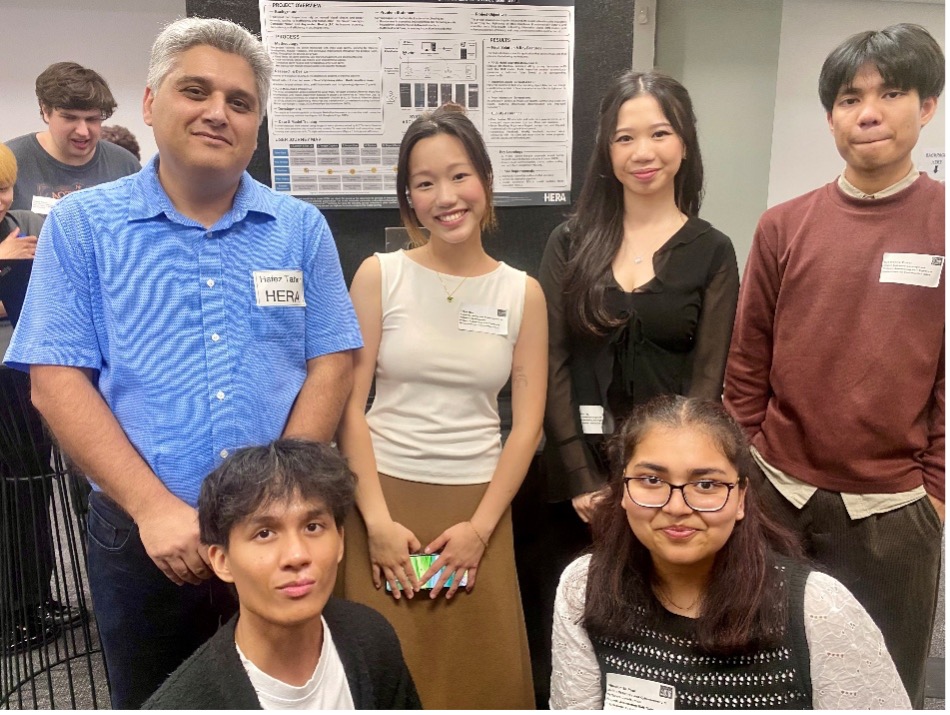
For their final-year engineering project, a team of AUT students set out to change that. Their goal was to modernise bolt inspections using Computer Vision and Augmented Reality (AR). They wanted to create a tool that didn’t just digitise the process but genuinely improved it, making inspections faster, more reliable, and easier to document. By combining real-time bolt detection with on-screen guidance through AR, the team aimed to give inspectors a smarter way to work, one that reduces human error while enhancing safety and quality assurance on site.
Tackling an Industry-Wide Challenge
The team chose this project after identifying ongoing challenges in the construction sector. Manual bolt inspection methods, such as marking checklists, visual confirmation, and handwritten notes, lack the efficiency and accuracy needed in today’s increasingly complex building projects.
“We wanted to find a way to make the process faster, more reliable, and easier to record,” the team explains. “Paper-based systems don’t always capture consistent information, and mistakes can happen. Digitising the process felt like a practical and needed solution.”
A Digital Approach to Inspection
The project resulted in a prototype system built around a mobile app that uses computer vision to automatically detect and classify bolts. The app also enables inspectors to:
- Record inspection results digitally
- Tag bolts to precise locations on digital building models
- Reduce the time spent on repetitive manual tasks
- Improve traceability and record-keeping
By combining automated recognition with AR overlays, inspectors can see critical information directly on their device, making inspections faster, more accurate, and easier to track.
Developing the Solution
The team began by researching existing inspection practices and identifying where digital tools could make the greatest impact. They then created a practical project plan that matched their timeframe while still allowing room for innovation.
Partnership with HERA played a significant role in shaping their work. HERA provided industry expertise, real-world examples, and guidance on selecting the right technologies.
“HERA’s feedback helped ensure that our design wasn’t just academically interesting,” the team says. “It was grounded in what inspectors and engineers actually need on-site.”
Learning Beyond the Classroom
The project became more than just a technical challenge. It also taught the team how to plan, manage, and deliver a complex project from start to finish.
Throughout the project, they learned to break down complex problems into manageable components, make informed design decisions independently, work collaboratively under tight deadlines, and adapt quickly when unexpected technical challenges appeared.
These experiences offered a realistic insight into how engineering projects operate in the real world.
Looking Ahead
The team sees significant potential for further development. Future improvements could include more advanced computer vision models, improved AR guidance tools, and integration with broader construction management systems.
“The skills we gained, both technical and teamwork, will help us wherever we go next,” they reflect. “We hope our work encourages more innovation in inspection processes and contributes to making construction sites safer and more efficient.”
A Step Toward Smarter Construction
By introducing automation and digital record-keeping to a traditionally manual process, the team’s project highlights how emerging technologies can strengthen quality control and reduce risks in the construction industry.
While still in its early stages, their system shows how digital tools can save time, minimise errors, and support better decision-making on-site. And for the students, it marks the beginning of careers shaped by innovation, problem-solving, and real-world impact.