


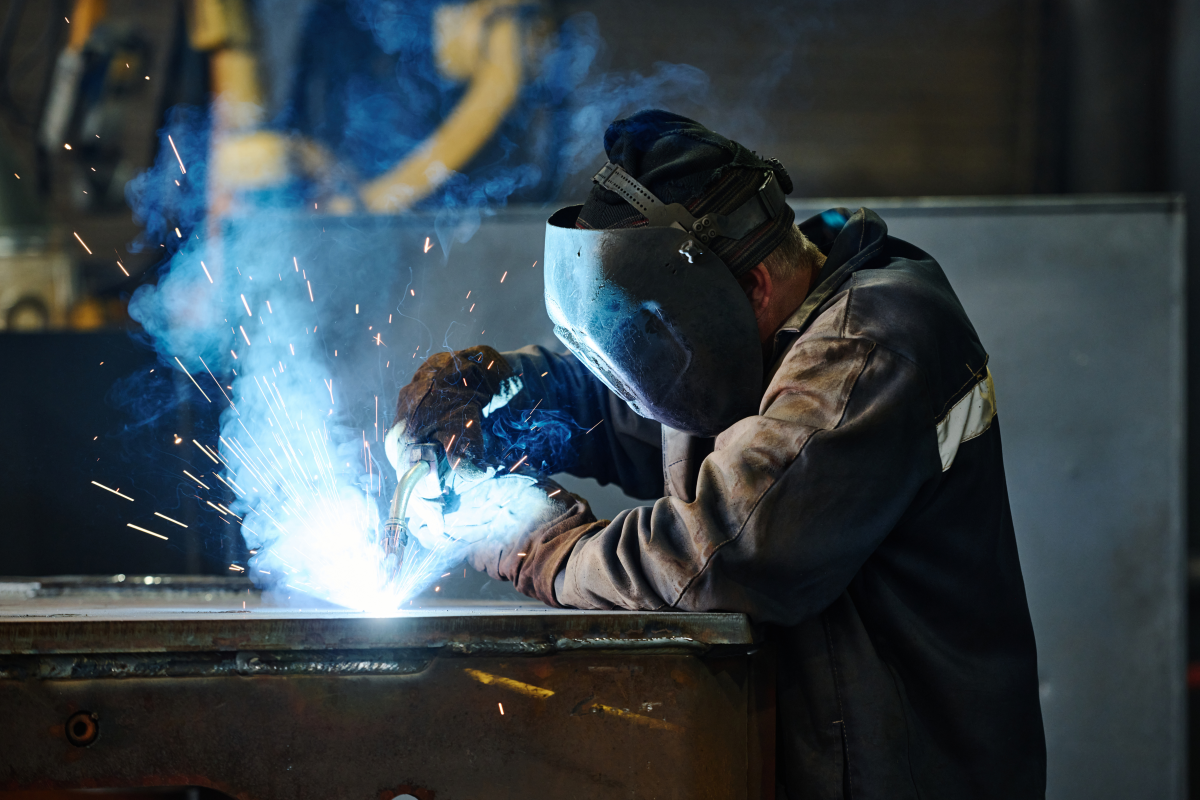
Advisory on boron content in imported structural steel and its impact on weldability and hydrogen-assisted cracking risk during welding.
Some imported structural steel may contain higher levels of boron than traditionally seen in Australian and New Zealand manufactured steel. Historically, boron has not been intentionally added to structural steel produced to AS or AS/NZS standards. However, some overseas steelmakers have added boron for various reasons, including improved hardenability and export-related incentives.
While boron-alloyed steels may comply with mechanical property requirements of relevant material standards, weldability considerations are more complex. AS/NZS 1554 welding requirements are based on carbon equivalent (CEIIW), which does not account for the effects of boron. Even very small additions of boron can significantly increase hardenability and raise susceptibility to hydrogen-assisted cracking in the heat-affected zone.
Boron is added in extremely small quantities, typically between 0.0003% and 0.005%. Despite these low levels, boron can substantially influence steel behaviour during welding by increasing hardness and reducing ductility and toughness in the heat-affected zone.
Recent revisions to several AS/NZS structural steel manufacturing standards now require boron content to be reported on test certificates, although most do not specify a strict upper limit. Technical Specifications SA TS 102 and SA TS 103 introduced a recommended limit of 0.0008% total boron. However, these Technical Specifications have not been adopted in New Zealand and currently have informative status only.
Fabricators are advised to verify boron content through mill certificates or accredited laboratory testing and to undertake additional weld qualification testing where required.
Read the full advisory here: click here.
Still have questions?
If you are unsure about boron levels in your supplied steel or how this may affect welding to AS/NZS 1554, we recommend speaking with your steel supplier in the first instance.
Our Welding Centre is also available to assist with technical advice on weldability, procedure qualification and preheat assessment. Please get in touch at welding@hera.org.nz.
Remember, as a Gold or Platinum member, you are entitled to up to 15 minutes of hotline advisory services from our technical team.
Not a member? Feel free to contact our Manager Customer Experience, Rebecca Symonds, to discuss what HERA membership could look like for your organisation.

