


Circular design & reuse
Imagine a world where nothing is wasted, everything is recreated, and all material is reused. This is the promise of exploring steel reuse within the circular economy.
To date, the reuse of elements in structures is not a common practice or well explored. Most structural engineers focus on optimising material use, enhancing efficiency, and reducing environmental impact to create sustainable structures. But what if we could design buildings as banks of infinitely reusable and recyclable resources?
Our rangahau is focused on shaping this new era of design – one where structures are created so that every component can be repurposed and reused, either during its lifetime or long after its original use.
Our projects
Materials passport – creating ‘banks’ of steel resources
A vision for a sustainable future.
Our steel circularity passport research marks a first for the Australasian construction sector, aimed at streamlining the reuse of structural steel. This concept envisions buildings as “banks” of materials, where components can be “withdrawn” for future use.
Part of our broader “Structures As Steel Banks (HERA-SASB)” program, this initiative addresses research gaps and promotes industry involvement in the circular economy. Rooted in the concept of cradle-to-cradle-to-cradle (C2C2C) sustainability, this approach emphasises continuous reuse and regeneration, ensuring materials are constantly cycled through the economy rather than being discarded.
For the steel industry, this holds huge potential. Structural steel is infinitely recyclable and reusable, and buildings can be designed for easy disassembly and reuse. Structural steel elements can also be easily cut and reshaped, and their capacity can be assessed using visual, acoustic, and load testing. This versatility makes steel an ideal material for advancing sustainable practices in construction.
Finding common ground
Overcoming the language barrier stopping uptake.
One of the key barriers we’ve identified to adopting materials passports for steel is a lack of understanding across different disciplines of what it actually is.
To address this, we’ve focused on redefining the common language to align with steel construction practices in Aotearoa. By using familiar terminology, we aim to bridge the gap in communication, making the benefits and applications of materials passports clear and accessible to the construction sector.
Numerical indentation simulation
Cost effectively verifying steel to facilitate reuse.
Reusing steel can save up to 96% of the environmental impact compared to using new steel, making it a key factor in sustainable construction.
However, a major barrier to steel reuse is the challenge of verifying its properties, particularly ensuring it hasn’t reached its yield stress. Currently, this verification requires intrusive and costly lab testing, or engineers must make conservative reuse assumptions, which can limit the feasibility of reusing steel.
Our rangahau focuses on developing non-intrusive, cost-effective methods to estimate the mechanical properties of structural steel, enabling more widespread reuse. This mahi involves:
- developing required finite element models;
- conducting sensitivity analysis of the numerical simulations results; and
- investigating the role of non-intrusive test data, finite element analysis and mathematical frameworks, in reliably estimating steel’s mechanical properties.
Explore some amazing projects where the reuse of steel has reduced carbon footprint of projects.
Steel recycling report
Recycling steel scrap is beneficial overall.
We commissioned thinkstep.anz to quantify and articulate the benefits of recycling steel that is produced and used in Aotearoa New Zealand. The infinite recyclability of steel is used as a key part of its sustainability messaging, however, with no large-scale recycling capability within Aotearoa – this is not immediately obvious to the local market.
The report showed an impressive 85% of steel scrap in Aotearoa is recycled, and that recycling steel scrap produced here provides significant environmental benefits – despite the need for transport to overseas recycling facilities. At 85% recovery, the savings in global warming potential per tonne of steel scrap generated in the sector was 1,249 kg CO2-equivalent. If 100 percent recovery could be achieved, there is potential savings of 1,473 kg CO2-equivalent.
The study also showed that the amount of steel scrap collected for recovery is critical to the overall benefits of the recycling system.
Data driven understanding of recycling
With an aim to identify the recycling rates of the steel used in New Zealand to validate sustainability credentials for recycling within the circular economy, our recycling study included:
- gathering data and information on how and where steel used and produced in New Zealand is recycled at end of life;
- understanding of the local and global scrap supply chain for steel used and produced here in Aotearoa;
- exploring how other metal materials are recycled both here and abroad;
- considering how recyclability differs based on the type of scrap, such as clean steel scrap vs. unseparated; and
- quantifying the carbon benefits of recycling steel used and produced in Aotearoa.




Component innovation
Connection design for composite timber-steel structures.
This research is linked to our ACM CRC funded project – a groundbreaking $250 million program under Australian Composites Manufacturing CRC initiative, which is driving engineering excellence, intelligent automation and advanced technology implementation.
The focus of this ranghau is to leverage technologies to optimise the assembly and disassembly of structural elements in alignment with circular design principles. This will not only improve waste control and environmental protection but also minimise damage to existing structural elements (through optimised connection design) and potentially create a new way of constructing infrastructure through the re-use of old structural elements from demolished buildings.

Resilience and durability innovation
Extending the life of structures beyond the standard 50-100 years.
We carry out a range of research projects that are focused on building resilience in structures across Aotearoa in corrosion, seismic, structural fire, brittle fracture and welded connections. We want to balance climate resilience and durability and enable the design of durable long-life structures.
In terms of corrosion – we have developed a GIS model covering the whole of Aotearoa with shapefiles of the corrosion categories. This is based on Table 2 from TS3404 overlaid on the more general dataset that has been developed by NIWA and HERA and used for the maps in TS3404.
This tool enables users to search by address and determine the corrosion classification based on Table 2 and identify how close a site is to the boundary of a corrosion classification (which may require more in-depth investigation before allocating a classification).
This mahi has improved the specification of steel coatings for the correct macroclimate corrosion zone improving durability for steel construction in Aotearoa.
Retrofitting innovation
Giving new life to old structures.
A distinctive application of steel is the delivery of resilience through retrofitting old earthquake prone (and non-compliant buildings). These buildings are given a second life through retrofit of seismic steel reinforcing.
This research is linked to our ROBUST building systems project which is exploring how friction structures respond in earthquakes. Friction within the connections dissipates the earthquake energy entering the structure. This is different from conventional systems, which generally rely on the yielding of steel. In these cases, the shaking elements damaged by yielding likely need replacement, but with frictional structures, the building can be reinstated with much less effort and cost.
Our expert

Latest news & resources
-
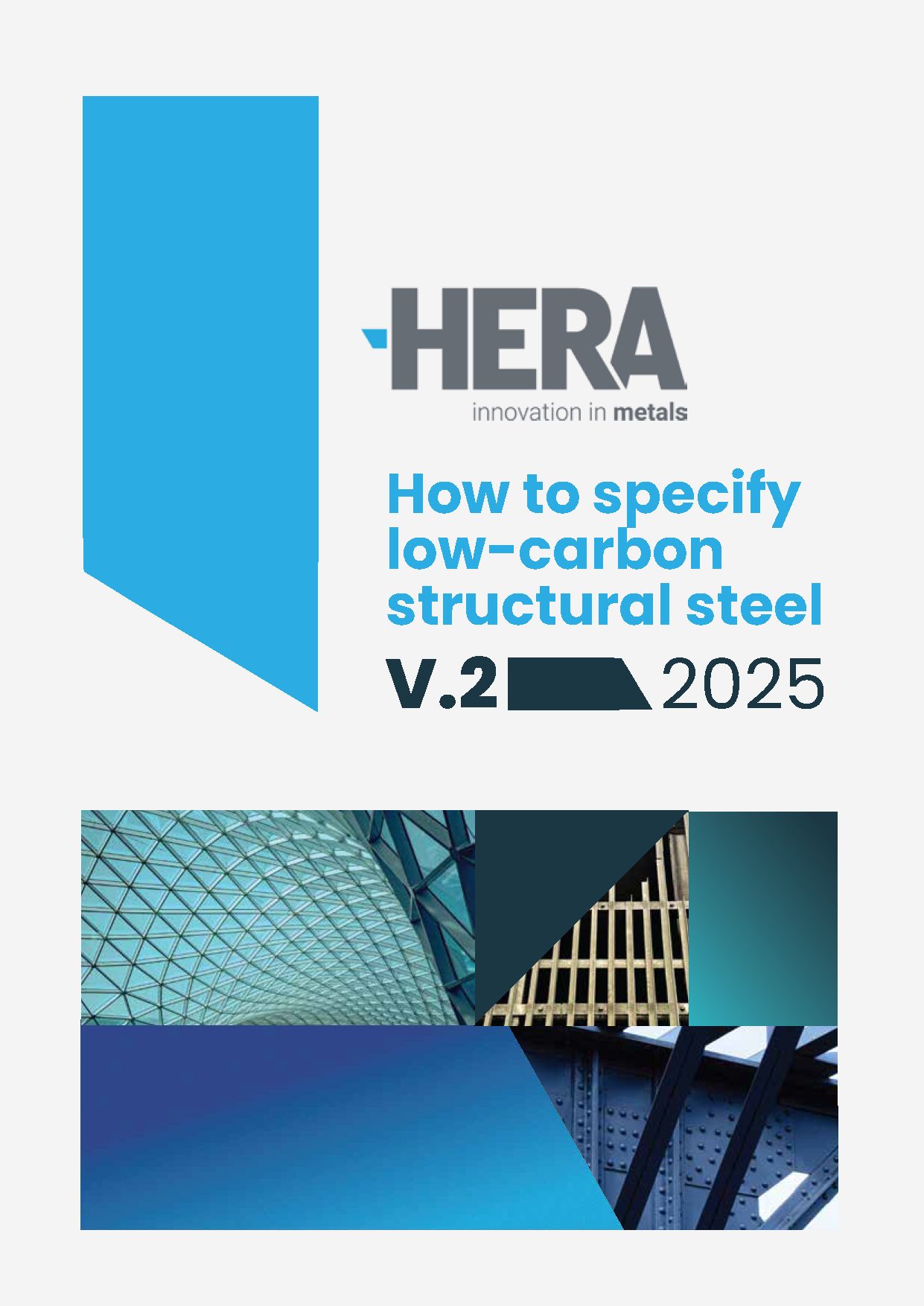
This is a practical guide to specifying low-carbon structural steel, introducing carbon benchmarking, EPDs, and procurement strategies to help reduce embodied carbon for sustainable construction.
-

Richard Templer breaks down why the steel levy matters more than most people realise, how stable funding shapes the engineering system we all rely on,…