


Low carbon future
As Aotearoa moves toward a low-carbon economy, our heavy engineering industry must step forward and acknowledge its vital role in that transition.
The first challenge lies in reducing emissions from steelmaking. Carbon is currently used as a reductant, not a fuel, and there are no commercially viable alternatives to coal in this process.
The second challenge is shifting focus from embodied carbon to lifecycle carbon emissions. Embodied carbon accounts only for emissions at the point of construction, while lifecycle carbon includes those generated during operation and at the end of a building’s life.
The third is the need to create a design framework that reduces construction waste and lifecycle embodied carbon, while strengthening circular practices across all materials.
HERA’s research is addressing these challenges through innovation, collaboration, and data-driven design frameworks that support the transition to a low-carbon future for Aotearoa.
Low carbon design
Cutting carbon in half with clever design!
A framework to reduce constructions impacts.
This research is a $772K project titled “Circular design for a changing environment: a design framework to reduce construction waste, lifecycle embodied carbon, and to enhance the circular economy for construction materials, with a pilot for low-rise buildings” of which $150K funding was received from BRANZ, funded by the building research levy. This project was also supported by an industry advisory group who came from a diverse range of backgrounds, roles and businesses to inform this mahi.
Early work focused on understanding trends in sustainable design skills, identifying barriers to achieving more sustainable outcomes, and analysing design obstacles throughout the life cycle assessment modules. We have since developed comprehensive low carbon design guidance for low-rise buildings using steel and steel-hybrid construction, offering clear, actionable insights into low carbon design principles and strategies. The findings have demonstrated that up to a 50% reduction in carbon emissions can be achieved through innovative design approaches.
Looking ahead, we plan to broaden the scope to include all building typologies and roll out training to ensure the sector can more readily adopt these sustainable design strategies.



Life cycle assessment
Advocating for Module D – circular assessment.
Lifecycle carbon assessments for buildings are most effective when calculated in a standardised way, such as through Environmental Product Declarations (EPDs) or by using transparent modular calculations.
The modules used in European Standards are:
- Module A – from production of the construction products and their assembly into buildings;
- Module B – the use of the building over its design life;
- Module C – the end-of-life of the building including demolition and disposal of the demolition waste; and
- Module D – considers building lifetime, including the reuse and recycling potential of materials and products recovered from the end-of-life of the building.
To ensures a more comprehensive evaluation of a building’s environmental impact and to promote sustainable practices throughout the entire lifecycle we advocate for the use of Module D, which takes the assessment from a “cradle to grave” approach into a “cradle to cradle” one, aligning with circular economy principles rather than a linear model.

Unpack life cycle assessment and modules today!
We get it! This life cycle stuff can be a bit confusing – especially when it comes to all the different modules and what they represent!
To help, we’ve created some quick reference infographics which breaks them down for you.


Zero carbon steel
A robust carbon offsetting program


Driving understanding
HERA’s role in sustainability
Improving the sustainability credentials of steel.
We aren’t a spokes group for steel manufacturers. They themselves will need to identify and communicate their plans for reducing carbon emissions through the steel making process directly.
Our role is to stimulate innovation to future-proof our industry. That’s why we’ve led the way in developing and implementing two key carbon initiatives for zero carbon steel building products in Aotearoa, and accounting for and offsetting our own carbon emissions.
To achieve this, we’ve aligned with like-minded organisation such as the Sustainable Steel Council (SSC), thinkstep-anz and industry early adopters in the sustainability space. Together, developing case studies, templates and programs to improve the sustainability credentials of our industry.

Steels contribution to the circular economy
A global challenge requiring a global solution.
The steel industry is integral to the global circular economy. It’s core to the successful delivery and maintenance of a sustainable future. The transition to renewable energies such as geothermal, solar, hydro, wind and wave energy generation, will also require extensive use of steel.
Steel is also infinitely recyclable, and its by-products and waste energies are valuable resources. For example, slag from steelmaking is used for civil works, saving natural resources such as river gravel and scoria. In Aotearoa, New Zealand Steel produces up to 70% of its own energy requirements, through co-generation. They have also announced plans to develop an electric arc furnace to enable re-use of steel scrap for steel production.
Our research is focused on not only fostering understanding of steel’s role in the circular economy and low carbon future, but also driving research to improve our credentials in this space.
-
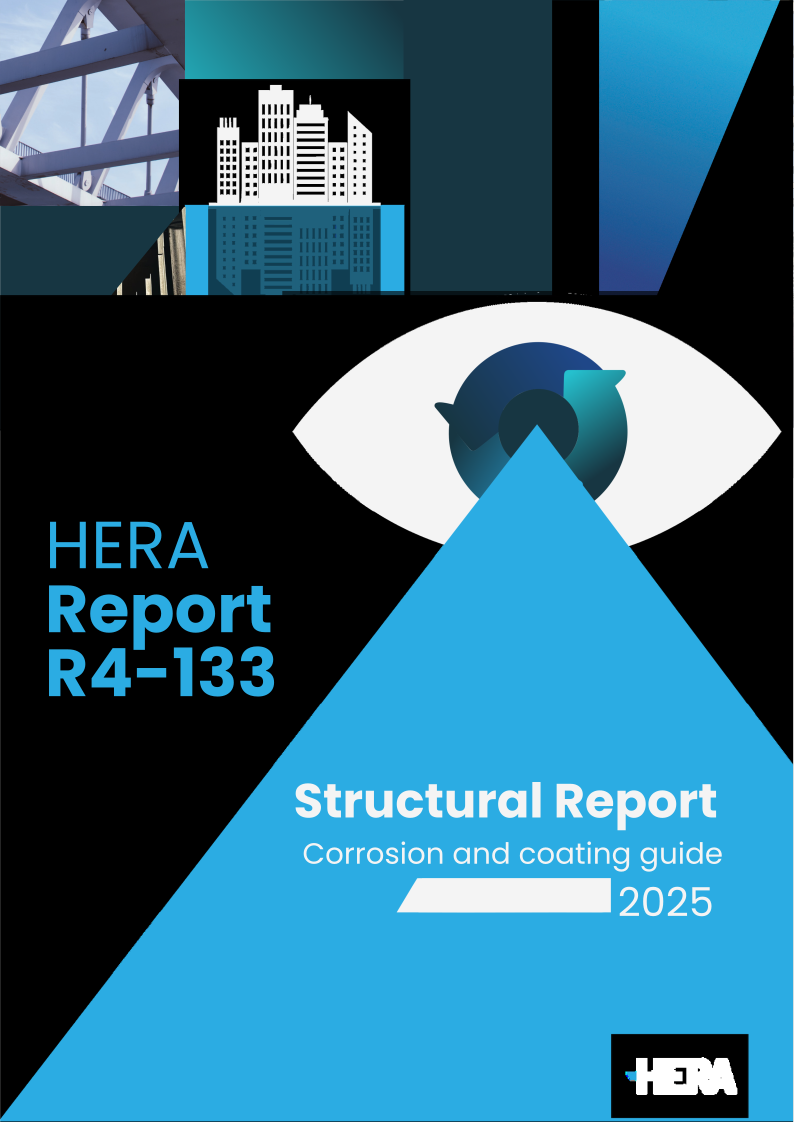
This guide offers guidance for selecting and specifying cost-effective coating systems for structural steelwork in a clear and generic manner.
-
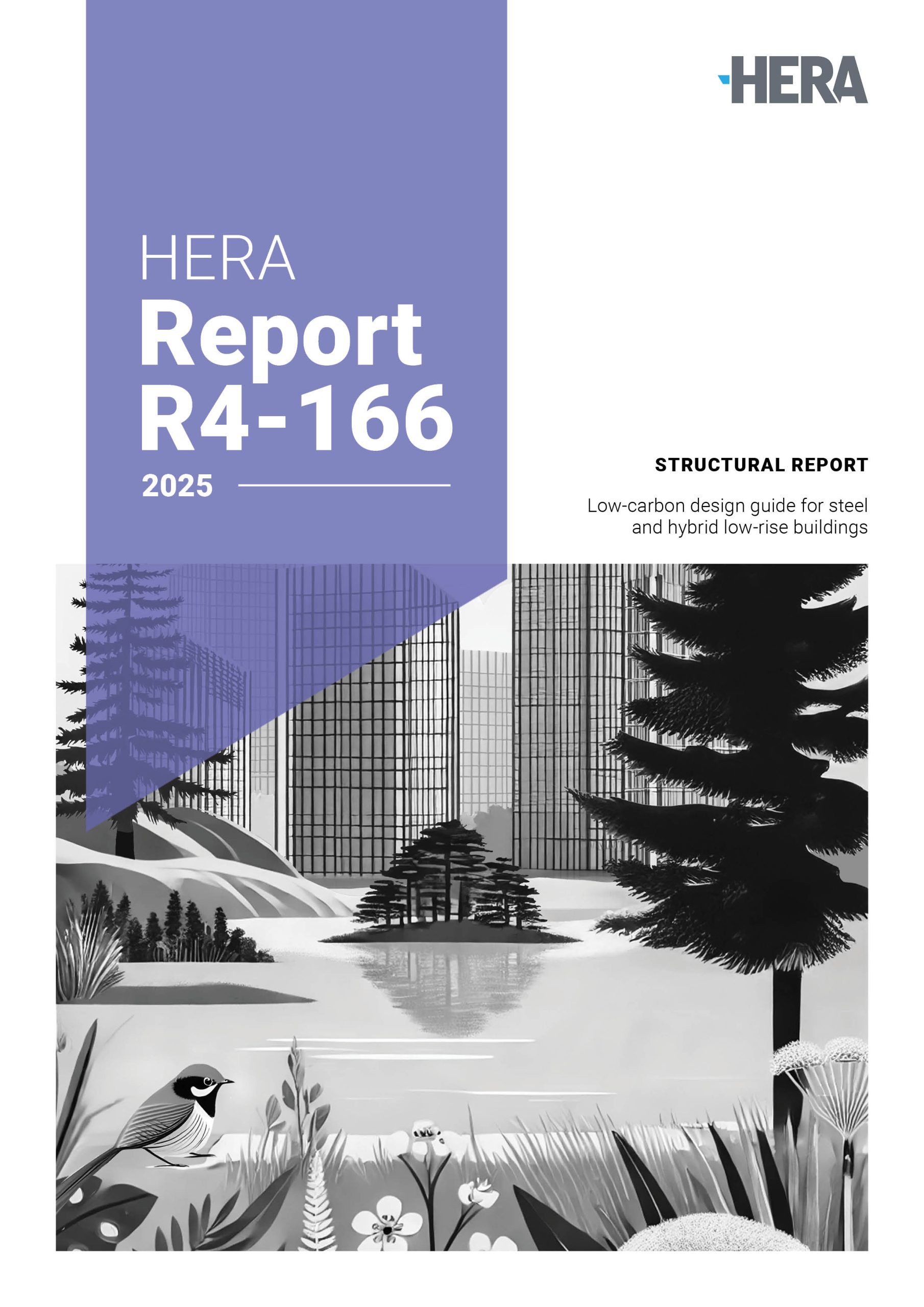
This design guide applies HERA’s Low-Carbon Circular Design Framework, demonstrating over 50% carbon reductions through design strategies, materials, adaptability, and disassembly in low-rise commercial buildings.
-
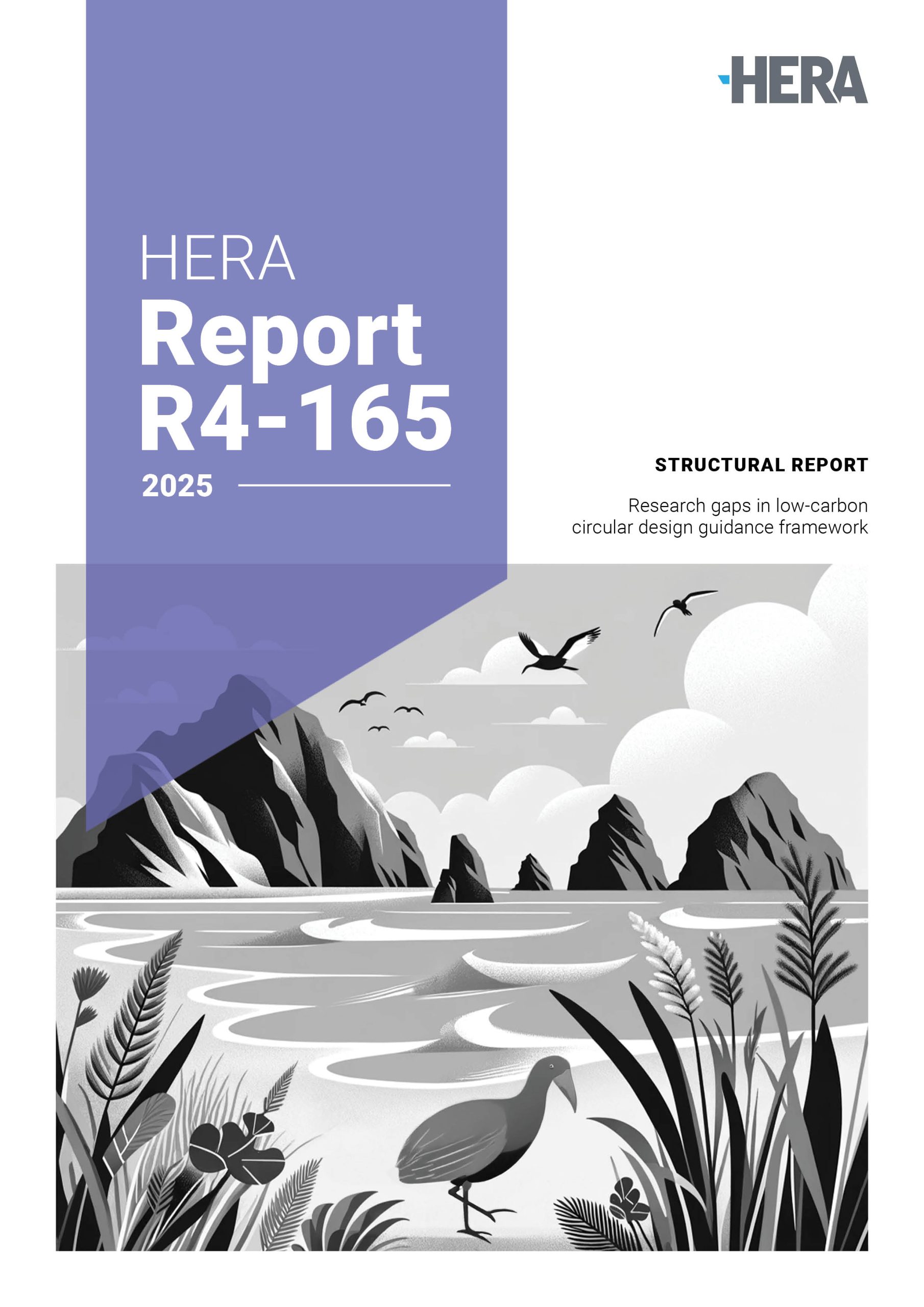
This report identifies research gaps in low-carbon circular design for steel buildings, excluding Construction 4.0 topics, which are covered separately under HERA’s ongoing research project.
Latest news & resources
-
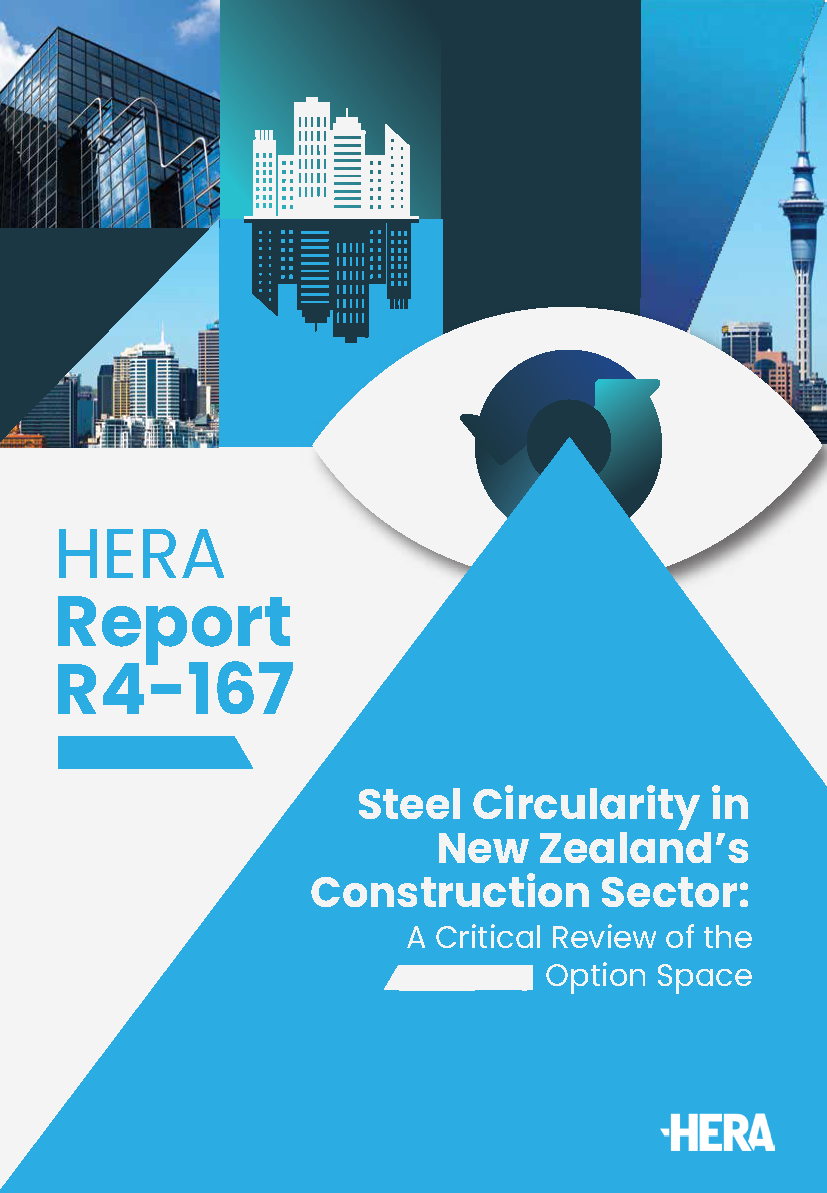
This report analyses current and future steel stocks and flows in New Zealand.
-
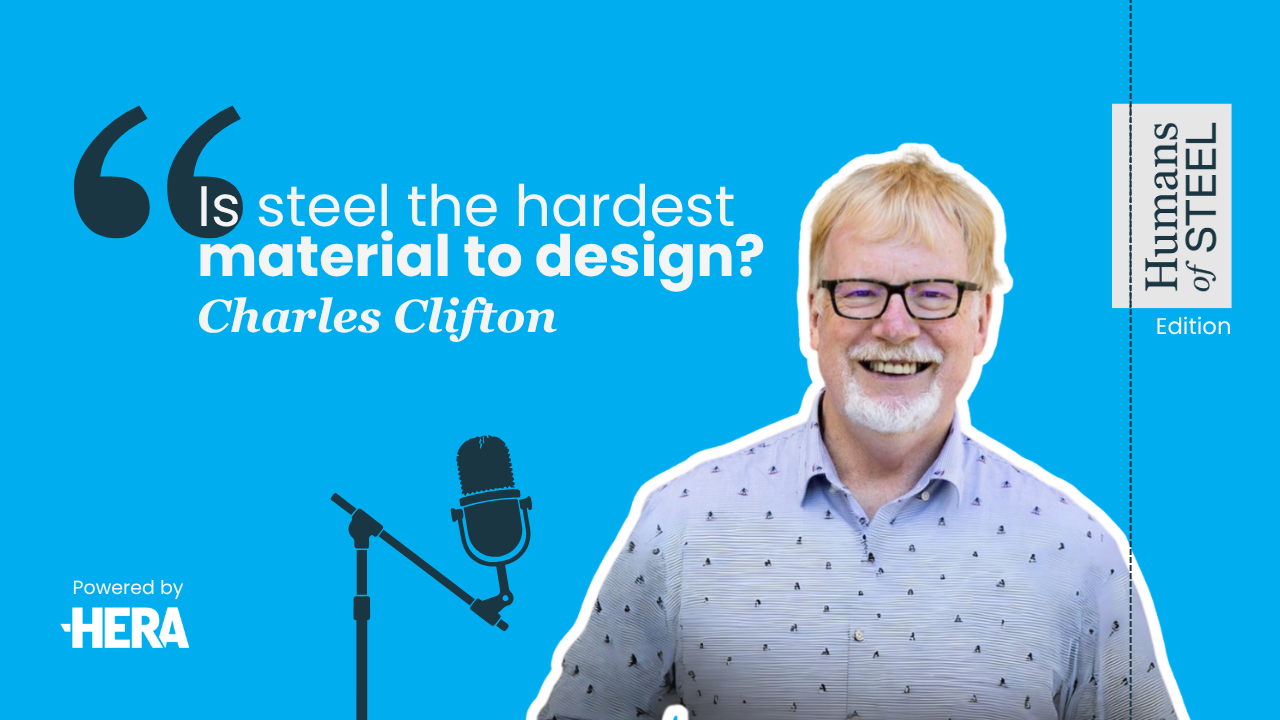
We’re having a kōrero with Dr Charles Clifton, a civil engineer and University of Canterbury graduate who started HERA’s structural steel division in 1983 and…